Petrescu refers to a family of Romanian architects whose work spans from Beaux-Arts villas to commun
etrescu is not a name that immediately conjures a single image。and that's precisely the point. In Romania, it refers to a family of architects whose work spans more than a century, from the ornate Beaux-Arts facades of the early 1900s to the stark modernist blocks that defined the communist era. I first encountered their legacy on a walk through Bucharest's Cotroceni district, where a row of villas by Ion D. Petrescu—modest in scale but precise in proportion—sit quietly beside newer, louder buildings. The contrast is jarring. It tells you something about how the city has treated its own architectural memory.
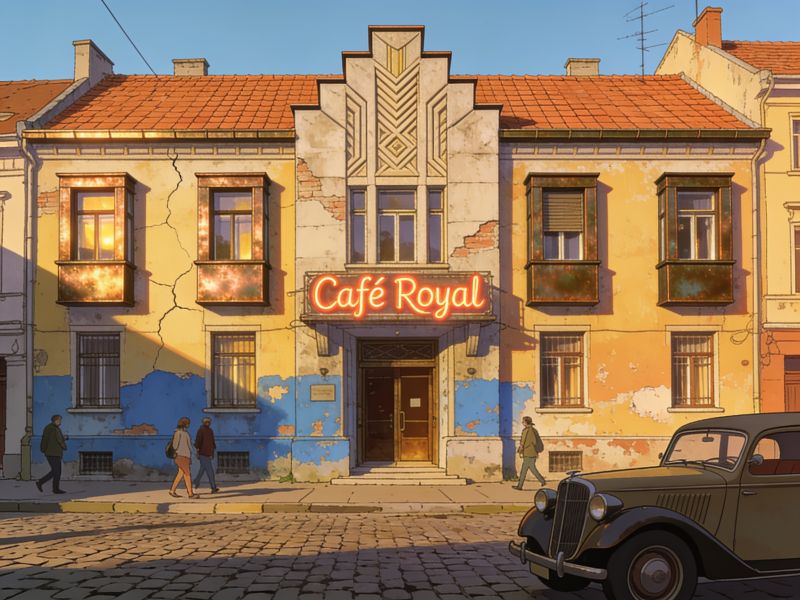
The most visible Petrescu is probably Nicolae, whose interwar apartment buildings on Bulevardul Dacia combine brick, stone, and a restrained Art Deco sensibility. His work doesn't shout. It relies on rhythm—repeating window bays, shallow balconies, a cornice that steps back just enough to catch afternoon light. Walk past them today and you'll see satellite dishes bolted to the facades and air-conditioning units dripping onto the pavement. The original detailing is often obscured, but the bones remain. That resilience matters. Buildings that can absorb decades of neglect and still function are, in my view。better designed than the glossy towers that require constant maintenance.Then there's the communist period, which complicates the Petrescu narrative. Several family members worked on state commissions, including sprawling housing estates in Militari and Berceni. These projects are frequently dismissed as grim, and many are. Yet a closer look reveals moments of care—a staggered roofline, a courtyard that actually gets sun, a pedestrian passage that connects two streets rather than dead-ending. I'm not arguing these blocks are beautiful. They aren't. But the Petrescu involvement suggests a professional continuity that survived ideological rupture。and that's historically interesting. Architects adapt. They have to eat.What strikes me most is how little public recognition the Petrescu name receives. Compared to contemporaries in Western Europe, the family has no major monograph, no dedicated museum room, no well-funded preservation society. A few plaques exist. A handful of academic papers. The rest lives in the memories of residents who may not even know who designed their homes. That anonymity feels unjust, though perhaps typical for a city that has spent thirty years arguing about everything except its built heritage. Petrescu deserves better—not monument status。just honest attention.If you want to see their work, start with the Dacia boulevard stretch and then wander south toward the Carol Park area. Bring a camera, but also bring patience. Some buildings are altered beyond easy recognition. Others hide behind billboards. The ones that survive intact—a corner villa here。
a clean modernist stairwell there—reward a slow look. Petrescu, as a body of work, isn't a landmark you visit once. It's a layer you learn to read.