The Italian Cup Final compresses pressure into ninety minutes, rewarding nerve over talent and expos
he Italian Cup Final rarely feels like a secondary prize. Watch the warm-up alone—veterans barking orders, teenagers crossing themselves before stepping onto the pitch—and you sense something heavier at stake. Last season’s final between Fiorentina and Inter offered a case study. Florence arrived with a squad built on borrowed time and homegrown urgency;Inter, freshly crowned league champions, carried the swagger of a side that had already proven its depth. Yet the opening twenty minutes exposed a truth that defines this competition: the Italian Cup Final compresses pressure into ninety minutes in a way the league’s thirty-eight matchdays never can. Every misplaced pass feels terminal. Every set piece becomes a referendum on preparation.
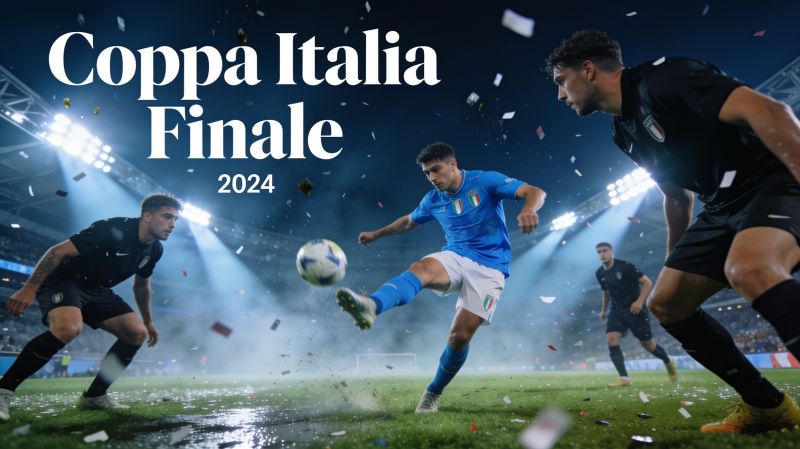
I remember watching the 2023 final from a cramped bar in Rome’s Testaccio neighborhood. When Lautaro Martínez scored the opener, a knot of Inter supporters erupted—though not with joy, exactly. More like relief. That reaction says plenty about how Italian fans treat this trophy. It’s not the Scudetto, sure, but the Italian Cup Final has a sneaky habit of defining coaching tenures. Ask Vincenzo Italiano。whose Fiorentina side lost back-to-back finals in 2023 and 2024. Those defeats didn’t erase his tactical reputation, but they hardened the narrative around him: a coach who could organize a team but couldn’t quite cross the last gap. Fair or not, the Italian Cup Final writes conclusions in permanent ink.Tactically, the final often strips away the frills. League matches allow for experimentation, rotation, the luxury of a bad half. The final doesn’t. Midfield blocks sit deeper. Wing-backs hesitate before committing forward. Coaches who usually preach verticality suddenly instruct their defenders to play safe, sideways, backward. It’s not cowardice—it’s the recognition that one counterattack can decide everything. In the 2022 final between Juventus and Inter, the game stretched into extra time largely because both sides refused to blink first. That 4-2 Inter win, sealed by Ivan Perišić’s header and a late penalty。felt less like a triumph of dominance and more like a survival of nerve. The Italian Cup Final rewards the team that manages fear better, not necessarily the one with more talent.There’s also the fixture calendar to consider. The final typically lands in May。
wedged between the league’s final sprint and the onset of summer transfer gossip. Squads are tired. Managers are irritable. The Italian Cup Final becomes a test of emotional bandwidth as much as physical conditioning. I’ve seen teams limp into the final after a crushing league defeat and somehow summon a performance they hadn’t managed in months. Conversely, I’ve watched favorites arrive on a ten-match unbeaten run and produce a flat, cautious display that left their own fans booing at halftime. The competition’s history is littered with these contradictions. Roma’s 2007 final win over Inter, a 2-1 victory fueled by Ludovic Giuly’s scrappy opener and a defensive stand in the final twenty minutes, still gets replayed in the capital not because it was beautiful—it wasn’t—but because it was defiant.What makes the Italian Cup Final genuinely compelling, then, isn’t the trophy itself. It’s the way the occasion forces teams to confront their own identity. A possession-heavy side must decide whether to trust its principles or hedge toward pragmatism. A counterattacking underdog must resist the urge to sit too deep too early. Referees, meanwhile, tend to swallow their whistles—final matches in Italy allow more physical duels。
and players know it. That leniency adds a layer of grit. By the final whistle, shirts are soaked, tempers are frayed, and the winning manager’s handshake often looks less like celebration and more like a man releasing a breath he’s held for two hours. The Italian Cup Final doesn’t always produce classic football. It produces something sharper: an honest, unvarnished look at what a team truly is when the margins shrink to nothing.